First Reading: Ezekiel 37:1-14
1The hand of the Lord was upon me, and he brought me out in the Spirit of the Lord and set me down in the middle of the valley; it was full of bones. 2And he led me around among them, and behold, there were very many on the surface of the valley, and behold, they were very dry. 3And he said to me, “Son of man, can these bones live?” And I answered, “O Lord God, you know.” 4Then he said to me, “Prophesy over these bones, and say to them, O dry bones, hear the word of the Lord. 5Thus says the Lord God to these bones: Behold, I will cause breath to enter you, and you shall live. 6And I will lay sinews upon you, and will cause flesh to come upon you, and cover you with skin, and put breath in you, and you shall live, and you shall know that I am the Lord.” 7So I prophesied as I was commanded. And as I prophesied, there was a sound, and behold, a rattling, and the bones came together, bone to its bone. 8And I looked, and behold, there were sinews on them, and flesh had come upon them, and skin had covered them. But there was no breath in them. 9Then he said to me, “Prophesy to the breath; prophesy, son of man, and say to the breath, Thus says the Lord God: Come from the four winds, O breath, and breathe on these slain, that they may live.” 10So I prophesied as he commanded me, and the breath came into them, and they lived and stood on their feet, an exceedingly great army. 11Then he said to me, “Son of man, these bones are the whole house of Israel. Behold, they say, ‘Our bones are dried up, and our hope is lost; we are indeed cut off.’ 12Therefore prophesy, and say to them, Thus says the Lord God: Behold, I will open your graves and raise you from your graves, O my people. And I will bring you into the land of Israel. 13And you shall know that I am the Lord, when I open your graves, and raise you from your graves, O my people. 14And I will put my Spirit within you, and you shall live, and I will place you in your own land. Then you shall know that I am the Lord; I have spoken, and I will do it, declares the Lord.”
Psalm 130
1Out of the depths have I called to you, O Lord; Lord, hear my voice; let your ears consider well the voice of my supplication. 2If you, Lord, were to note what is done amiss, O Lord, who could stand? 3For there is forgiveness with you; therefore you shall be feared. 4I wait for the Lord; my soul waits for him; in his word is my hope. 5My soul waits for the Lord, more than watchmen for the morning, more than watchmen for the morning. 6O Israel, wait for the Lord, for with the Lord there is mercy; 7With him there is plenteous redemption, and he shall redeem Israel from all their sins.
Second Reading: Romans 8:1-11
1There is therefore now no condemnation for those who are in Christ Jesus. 2For the law of the Spirit of life has set you free in Christ Jesus from the law of sin and death. 3For God has done what the law, weakened by the flesh, could not do. By sending his own Son in the likeness of sinful flesh and for sin, he condemned sin in the flesh, 4in order that the righteous requirement of the law might be fulfilled in us, who walk not according to the flesh but according to the Spirit. 5For those who live according to the flesh set their minds on the things of the flesh, but those who live according to the Spirit set their minds on the things of the Spirit. 6For to set the mind on the flesh is death, but to set the mind on the Spirit is life and peace. 7For the mind that is set on the flesh is hostile to God, for it does not submit to God’s law; indeed, it cannot. 8Those who are in the flesh cannot please God. 9You, however, are not in the flesh but in the Spirit, if in fact the Spirit of God dwells in you. Anyone who does not have the Spirit of Christ does not belong to him. 10But if Christ is in you, although the body is dead because of sin, the Spirit is life because of righteousness. 11If the Spirit of him who raised Jesus from the dead dwells in you, he who raised Christ Jesus from the dead will also give life to your mortal bodies through his Spirit who dwells in you.
Gospel: John 11:1-45 [46-53]
1Now a certain man was ill, Lazarus of Bethany, the village of Mary and her sister Martha. 2It was Mary who anointed the Lord with ointment and wiped his feet with her hair, whose brother Lazarus was ill. 3So the sisters sent to him, saying, “Lord, he whom you love is ill.” 4But when Jesus heard it he said, “This illness does not lead to death. It is for the glory of God, so that the Son of God may be glorified through it.” 5Now Jesus loved Martha and her sister and Lazarus. 6So, when he heard that Lazarus was ill, he stayed two days longer in the place where he was. 7Then after this he said to the disciples, “Let us go to Judea again.” 8The disciples said to him, “Rabbi, the Jews were just now seeking to stone you, and are you going there again?” 9Jesus answered, “Are there not twelve hours in the day? If anyone walks in the day, he does not stumble, because he sees the light of this world. 10But if anyone walks in the night, he stumbles, because the light is not in him.” 11After saying these things, he said to them, “Our friend Lazarus has fallen asleep, but I go to awaken him.” 12The disciples said to him, “Lord, if he has fallen asleep, he will recover.” 13Now Jesus had spoken of his death, but they thought that he meant taking rest in sleep. 14Then Jesus told them plainly, “Lazarus has died, 15and for your sake I am glad that I was not there, so that you may believe. But let us go to him.” 16So Thomas, called the Twin, said to his fellow disciples, “Let us also go, that we may die with him.” 17Now when Jesus came, he found that Lazarus had already been in the tomb four days. 18Bethany was near Jerusalem, about two miles off, 19and many of the Jews had come to Martha and Mary to console them concerning their brother. 20So when Martha heard that Jesus was coming, she went and met him, but Mary remained seated in the house. 21Martha said to Jesus, “Lord, if you had been here, my brother would not have died. 22But even now I know that whatever you ask from God, God will give you.” 23Jesus said to her, “Your brother will rise again.” 24Martha said to him, “I know that he will rise again in the resurrection on the last day.” 25Jesus said to her, “I am the resurrection and the life. Whoever believes in me, though he die, yet shall he live, 26and everyone who lives and believes in me shall never die. Do you believe this?” 27She said to him, “Yes, Lord; I believe that you are the Christ, the Son of God, who is coming into the world.” 28When she had said this, she went and called her sister Mary, saying in private, “The Teacher is here and is calling for you.” 29And when she heard it, she rose quickly and went to him. 30Now Jesus had not yet come into the village, but was still in the place where Martha had met him. 31When the Jews who were with her in the house, consoling her, saw Mary rise quickly and go out, they followed her, supposing that she was going to the tomb to weep there. 32Now when Mary came to where Jesus was and saw him, she fell at his feet, saying to him, “Lord, if you had been here, my brother would not have died.” 33When Jesus saw her weeping, and the Jews who had come with her also weeping, he was deeply moved in his spirit and greatly troubled. 34And he said, “Where have you laid him?” They said to him, “Lord, come and see.” 35Jesus wept. 36So the Jews said, “See how he loved him!” 37But some of them said, “Could not he who opened the eyes of the blind man also have kept this man from dying?” 38Then Jesus, deeply moved again, came to the tomb. It was a cave, and a stone lay against it. 39Jesus said, “Take away the stone.” Martha, the sister of the dead man, said to him, “Lord, by this time there will be an odor, for he has been dead four days.” 40Jesus said to her, “Did I not tell you that if you believed you would see the glory of God?” 41So they took away the stone. And Jesus lifted up his eyes and said, “Father, I thank you that you have heard me. 42I knew that you always hear me, but I said this on account of the people standing around, that they may believe that you sent me.” 43When he had said these things, he cried out with a loud voice, “Lazarus, come out.” 44The man who had died came out, his hands and feet bound with linen strips, and his face wrapped with a cloth. Jesus said to them, “Unbind him, and let him go.” 45Many of the Jews therefore, who had come with Mary and had seen what he did, believed in him, 46but some of them went to the Pharisees and told them what Jesus had done. 47So the chief priests and the Pharisees gathered the council and said, “What are we to do? For this man performs many signs. 48If we let him go on like this, everyone will believe in him, and the Romans will come and take away both our place and our nation.” 49But one of them, Caiaphas, who was high priest that year, said to them, “You know nothing at all. 50Nor do you understand that it is better for you that one man should die for the people, not that the whole nation should perish.” 51He did not say this of his own accord, but being high priest that year he prophesied that Jesus would die for the nation, 52and not for the nation only, but also to gather into one the children of God who are scattered abroad. 53So from that day on they made plans to put him to death.
A Breath of Fresh Air
Three church lay-leaders were hiking across an old wooden foot bridge that hung fifty feet above a dry rocky creek bed. They stopped for a moment to take in the breath-taking view of the distant hillsides, the green pastures filled with grazing cattle, and endless rows of tall cornstalks waving in the gentle breeze. “God is in heaven and all is right with the world,” remarked Bill. “It’s days like this when we really need to stop and count our blessings,” added Ralph.
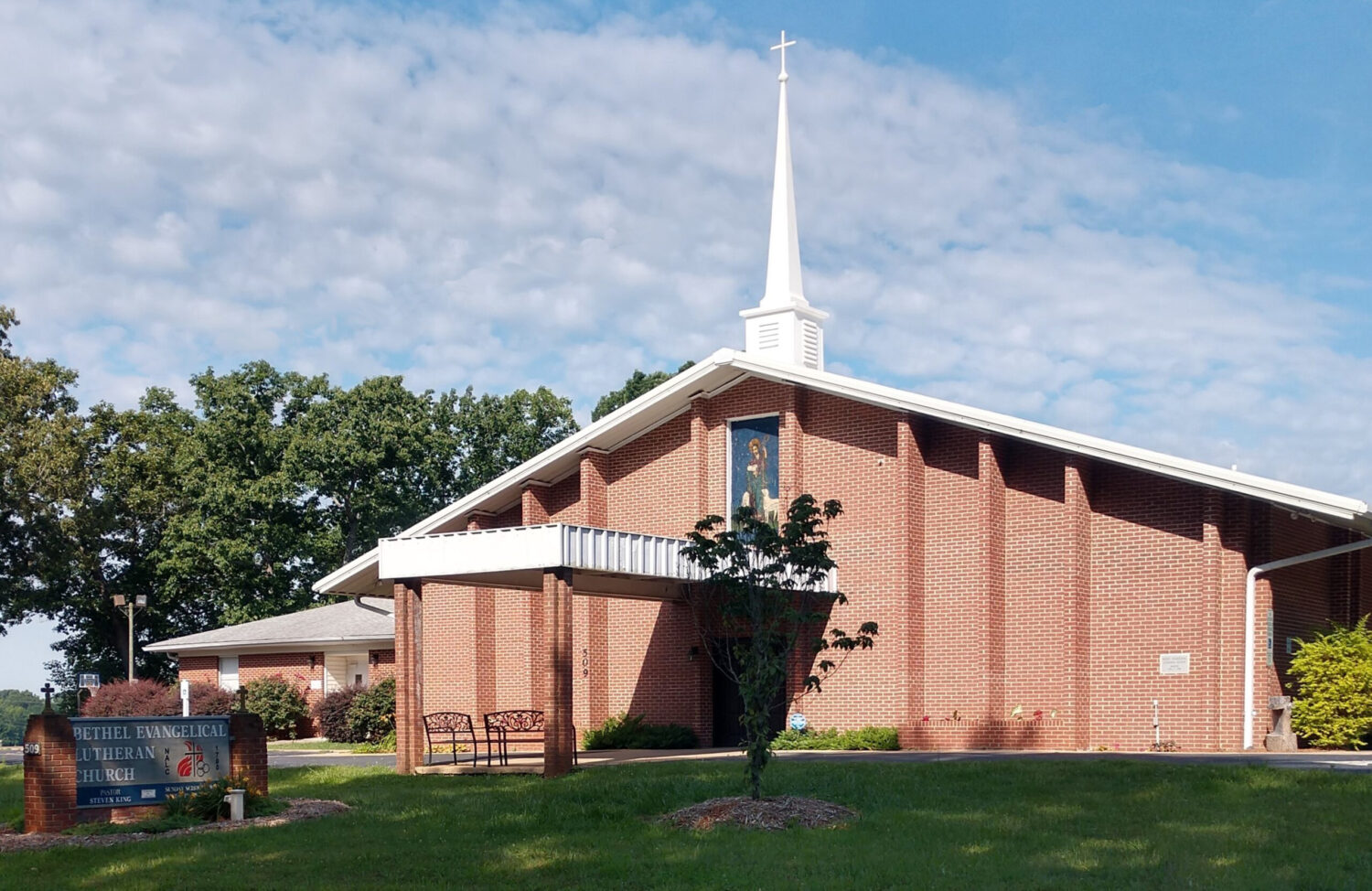
“You’re both right,” said Sue, “And one of our blessings is our church right down there,” she exclaimed, pointing to the century old red brick structure with the tall white steeple. “Just look at the cemetery. Think of all our families and friends who settled here and built our first sanctuary. What a legacy they’ve left us! The cemetery must be filled with stories of hard work and love and faith.” “Yep,” said Bill. “I agree,” said Ralph, eager to finish their hike.
However, Sue, wanting to continue the conversation, asked, “I wonder what would happen if this bridge suddenly collapsed under our combined weight. I wonder what it would be like if we fell and, well, that was it. We would be laid out in our coffins side by side, in the church, waiting for our funerals to begin. Looking at Bill, Sue continued, “what would you like folks to say about you as they visited with your family?” “Honestly, I haven’t really given it much thought,” Bill said as he looked nervously at their cars parked at the other side of the bridge. “I guess I’d want folks to say I was a good husband and father, I worked hard, and I loved Jesus. What about you, Sue?”
“Well,” began Sue. “I’d like folks to say I was a good worker for the Lord, I loved my family, and heaven is a wonderful place. Ralph, What about you? You’ve been pretty quiet. What would you like people to say about you when you’re all stretched out in your coffin?” “Well,” sighed Ralph, “I’d like folks to say, ‘Look! He’s moving!’” Death and life, it’s the topic of our First and Gospel readings for today.
In our gospel reading, Jesus tells His disciples, “Our friend Lazarus has fallen asleep, but I go to awaken him.” The disciples said to him, “Lord, if he has fallen asleep, he will recover.” Now Jesus had spoken of his death, but they thought that he meant taking rest in sleep. Then Jesus told them plainly, “Lazarus has died, and for your sake I am glad that I was not there, so that you may believe. But let us go to him” (vss. 11-15). In the case of Ezekiel, God shows him a valley full of dry bones and askes an unexpected question, “can these bones live” (37:3). Life and death, these are two subjects that we’re all too familiar with.
We’ve all heard the song, “The toe bone’s connected to the foot bone, the foot bone’s connected to the ankle bone, the ankle bone’s connected to the shin bone…now hear the word of the Lord.” It’s a delightful little spiritual that reminds us of our Old Testament text, Ezekiel’s vision of the valley of dry bones. But we all know this vision shown to Ezekiel is more than simply about the life and death of an individual, this is also about the death and life of God’s chosen and the death and life of God’s people as a whole. And the key to understanding what’s going on here in our reading comes in God’s reply, “I will put my Spirit within you, and you shall live” (vs. 14).
Ezekiel’s vision was the third major vision God showed Ezekiel; it was a vision of hope for people in the valley of despair. In verses 1-3 we read, “The hand of the Lord was upon me, and he brought me out by the Spirit of the Lord and set me in the middle of the valley; it was full of bones. He led me back and forth among them, and I saw a great many bones on the floor of the valley, bones that were very dry. He asked me, “Son of man, can these bones live?” I said, “O sovereign Lord, you alone know.”
To help set this vision in context, in the 13-year war between King Zedekiah and King Nebuchadnezzar, one-third of Judah’s population starved to death, one-third were killed in battle, and about one-third were carried off to Babylonian captivity. Due to the fighting, the valley of Judah contained the decayed bones of slain victims denied the dignity of a decent burial, their flesh picked clean by the birds of the air. This vision of Ezekiel was more than a figment of his imagination. This vision God gave Ezekiel could very well have been a memory of the sight he saw as he was carried away from his hometown into captivity. Ezekiel’s vision was more than a scene of devastation; it was also a vision of warning and of hope.
Ezekiel’s vision is one we need to share; we need to see the destruction and the devastation that the world can bring on a church and to its people. In an article published this past week titled, Christian parents lose final appeal after Swedish state took daughters following false abuse claim, the report read, “A Christian couple’s years-long fight to regain custody of their daughters from the Swedish government was dealt a major setback last week after a top European court rejected their plea for help. The European Court of Human Rights (ECtHR) ruled the case brought by Daniel and Bianca Samson “inadmissible” on March 10, a final decision that cannot be appealed.
According to Alliance Defending Freedom International, which is supporting the family’s legal effort, the children have been separated from their parents since December 2022. ADF International said the case began after the couple’s eldest daughter, Sara, then 11, made a false abuse report at school following a fight with her parents over not being allowed to have a smartphone or wear makeup. ADF said the girl quickly retracted the allegation and that prosecutors found no evidence of abuse, but the Swedish state refused to return the children. According to the legal group, the state cited the family’s habit of attending church three times a week and their parenting choices as evidence of “religious extremism” and justification for keeping the children.” The threats against God’s people from the world are real. Satan will do anything he can to reduce us to nothing but dry bones.
Amidst this scene of death, decay, and destruction, the Lord asks Ezekiel a powerful and important question, “Son of man, can these bones live?” As we picture this scene, we should ask ourselves some important questions. What do our fellow members say about us? What do we say about ourselves? What do we say about our community? Are most of the verbs we use in the past tense? Do we spend most of our time thinking about what it was like in the past, or do we look to the future?
Do we often grumble about the present and question if there will be a future for our church? Do we sometimes feel so used up and dried up, that we’ve given up all hope? Some scholars claim that congregations belonging to mainline denominations are now on the decline, watching life from the sidelines, reacting with a ho-hum line, and rapidly descending to flat line. Do people look at us and say, “They have become dried up, helpless, and hopeless… just like the bones in Ezekiel’s vision” (Ezekiel 37:1-2). Do people pass by our church perceiving it as a coffin, holding the remains of a once vital ministry?
A young man in a wheelchair, crippled by an accident, asks his friend, “Do I have a future?” A couple sits in a counselor’s office, “Can our marriage be saved?” A widow sinks into a chair. Only a few hours before the funeral she asks, “How can I go on?” “Son of man, can these bones live?” Can that which is dead be returned to life? Can a situation that has been written off as hopeless be recouped, revived, resurrected? Is there any hope? Or does the exclamation, “Look, he’s moving,” apply to us or to our congregation? How would you and I respond if the Lord asked us the same question that He asked Ezekiel: “Mortal, can these bones live?” (Ezekiel 37:3). Do we fail to see what God is promising here?
Remember what I said was the key to understanding this passage? The Lord promised the dry bones, “I will put my Spirit within you and you shall live” (Ezekiel 37:14). What would that look like here? For us? For this congregation? The crucial word in today’s lesson is “Spirit” or in Hebrew, “ruah.” When God breathes life, even the driest and most brittle bones, are filled with God’s life-giving Spirit. With God’s breath of fresh air, that which is dried up and hopeless can begin to move with new life, new hope, and new energy. Again, let’s consider this passage in its historical context.
The Hebrew people were in the midst of a seventy-year exile in Babylon. After a long siege and fierce fighting, Jerusalem was overcome by Babylonian troops under King Nebuchadnezzar. Its city walls were nothing but rubble. The magnificent temple was in ruins. Its leading citizens were taken captive into Babylon, an arduous 900-mile journey. The scene Ezekiel describes is a desolate plain where battles had been fought; a place of death and devastation. Here, in this place, hopes were dashed, life was helpless despair, energy was dried up. It seemed as if even God had abandoned His own people.
As Ezekiel gazed upon this tragic scene, the Lord asked him, “Mortal, can these bones live?” Ezekiel wisely answers, “O Lord God, you know” (Ezekiel 37:3). Perhaps the Lord is asking this same question to us today: “Mortals, can the weak and weary among us be revived? Mortals, can these dried up and apathetic Christians find renewed energy? Mortals, can the burdened bones of our people not just survive, but thrive?” Our answer is, “O Lord God, you know.”
And the good news is God did know and God did act, showing Ezekiel just what God’s breath of fresh air could do. In Baptism, God sent His Spirit into us and that same Spirit is breathing fresh air into our lives even now. God can and does revive that which was dry and dead: dead hope, dead faith, dead community, dead lives. God breathes and suddenly “Look, they’re moving”… moving with new life, new hope, and new energy. This is God’s promise to us, to the church, and to all dry bones: “I will put my Spirit in you, and you shall live.”
A breath of fresh air from the Lord does indeed give new life to a spiritually, emotionally, physically, and relationally drained and dry people. The Lord told Ezekiel that the dry bones really were the community of Israel. After the defeat at Jerusalem and their exile into Babylonia, they had given up all hope of reuniting with friends and family back home. They had given up hope of ever again being a chosen nation of the Lord. “They say our bones are dried up and our hope is lost. We are cut off completely” (Ezekiel 37:11). It’s also easy for us to give up any hope for even the tiniest whisper of fresh air. However, in scripture, hope is more than a remote possibility that something nearly impossible might happen, hope is the assurance of things not seen, (Hebrews 11:1) grounded in the faith we have in God’s promises.
In scripture, especially in today’s text, hope is the sure and certain anticipation and expectation of what God has done, is doing, and promises to continue to do with and for His people. Hope is given through the breath of fresh air and the Spirit that God has given to us. Hope includes the wisdom to see things as they are and the vision to see what they will become when the Lord breathes on us. What does hope look like when dry bones are connected, muscles develop, skin grows, and God’s breath fills them? (Ezekiel 37:7-10).
Look at the font and the splash of Jesus’ love that connects and renews. Look at the altar and the nourishment of Jesus Himself that feeds the soul. Look at the cross and see the love of Jesus that spills out and fills empty hearts. We are indeed surrounded by a great cloud of witnesses who now live in the reality of hope coming to pass in our midst. A breath of fresh air from the Lord reduces exhaustion and renews energy for even the driest bones.
A group of senior citizens were on a bus tour in Switzerland. They stopped at a farm, famous for its cheese made from goat’s milk. Pointing to a small herd of goats in a nearby field the guide said, “Those are older goats, put out to pasture when they’re too old to produce milk. What do you American’s do with your old goats?” With a twinkle in her eye one woman remarked, “They send us on bus tours of Switzerland and let us live in Sun City.” What happens when congregations seem to be drained of all vitality and vibrancy? What do we do when we run out of energy? More importantly, what happens to dry bones when the Lord breathes new life into them?
God’s breath of fresh air is more than a bus tour and a rocking chair for God’s people. What are the signs of new life and energy that we see around us, at home, in our congregation? God’s exiled people were so dried up that they couldn’t see anything but devastation and couldn’t feel anything but isolation. They needed Ezekiel to open their eyes and to help them feel the wind of the Spirit as God breathed new life into their souls.
Our readings for today remind us that because of Jesus, the wind of God’s Spirit is blowing in our midst today… giving us new life, new hope, and new energy. All we need to do is open our eyes to see what that looks like. We need to open our ears to hear again God’s promise to the exiles in Babylon and to us: “I will put my Spirit within you and you shall live.” We need to hear the promise God gave through the prophet Jeremiah, “For I know the plans I have for you,” declares the Lord, “plans to prosper you and not to harm you, plans to give you hope and a future” (29:11).
Amen