First Reading: Job 38:4-18
4“Where were you when I laid the foundation of the earth? Tell me, if you have understanding. 5Who determined its measurements — surely you know! Or who stretched the line upon it? 6On what were its bases sunk, or who laid its cornerstone, 7when the morning stars sang together and all the sons of God shouted for joy? 8Or who shut in the sea with doors when it burst out from the womb, 9when I made clouds its garment and thick darkness its swaddling band, 10and prescribed limits for it and set bars and doors, 11and said, ‘Thus far shall you come, and no farther, and here shall your proud waves be stayed’? 12Have you commanded the morning since your days began, and caused the dawn to know its place, 13that it might take hold of the skirts of the earth, and the wicked be shaken out of it? 14It is changed like clay under the seal, and its features stand out like a garment. 15From the wicked their light is withheld, and their uplifted arm is broken. 16Have you entered into the springs of the sea, or walked in the recesses of the deep? 17Have the gates of death been revealed to you, or have you seen the gates of deep darkness? 18Have you comprehended the expanse of the earth? Declare, if you know all this.”
Psalm 18:1-17
1I love you, O Lord my strength, O Lord my stronghold, my crag, and my haven. 2My God, my rock in whom I put my trust, my shield, the horn of my salvation, and my refuge: You are worthy of praise. 3I will call upon the Lord, and so shall I be saved from my enemies. 4The breakers of death rolled over me, and the torrents of oblivion made me afraid. 5The cords of hell entangled me, and the snares of death were set for me. 6I called upon the Lord in my distress and cried out to my God for help. 7He heard my voice from his heavenly dwelling; my cry of anguish came to his ears. 8The earth reeled and rocked; the roots of the mountains shook; they reeled because of his anger. 9Smoke rose from his nostrils and a consuming fire out of his mouth; hot burning coals blazed forth from him. 10He parted the heavens and came down with a storm cloud under his feet. 11He mounted on cherubim and flew; he swooped on the wings of the wind. 12He wrapped darkness about him; he made dark waters and thick clouds his pavilion. 13From the brightness of his presence, through the clouds, burst hailstones and coals of fire. 14The Lord thundered out of heaven; the Most High uttered his voice. 15He loosed his arrows and scattered them; he hurled thunderbolts and routed them. 16The beds of the seas were uncovered, and the foundations of the world laid bare, at your battle cry, O Lord, at the blast of the breath of your nostrils. 17He reached down from on high and grasped me; he drew me out of great waters.
Second Reading: Romans 10:5-17
5Moses writes about the righteousness that is based on the law, that the person who does the commandments shall live by them. 6But the righteousness based on faith says, “Do not say in your heart, ‘Who will ascend into heaven?’” (that is, to bring Christ down) 7“or ‘Who will descend into the abyss?’” (that is, to bring Christ up from the dead). 8But what does it say? “The word is near you, in your mouth and in your heart” (that is, the word of faith that we proclaim); 9because, if you confess with your mouth that Jesus is Lord and believe in your heart that God raised him from the dead, you will be saved. 10For with the heart one believes and is justified, and with the mouth one confesses and is saved. 11For the Scripture says, “Everyone who believes in him will not be put to shame.” 12For there is no distinction between Jew and Greek; for the same Lord is Lord of all, bestowing his riches on all who call on him. 13For “everyone who calls on the name of the Lord will be saved.” 14How then will they call on him in whom they have not believed? And how are they to believe in him of whom they have never heard? And how are they to hear without someone preaching? 15And how are they to preach unless they are sent? As it is written, “How beautiful are the feet of those who preach the good news!” 16But they have not all obeyed the gospel. For Isaiah says, “Lord, who has believed what he has heard from us?” 17So faith comes from hearing, and hearing through the word of Christ.
Gospel: Matthew 14:22-33
22Immediately {Jesus} made the disciples get into the boat and go before him to the other side, while he dismissed the crowds. 23And after he had dismissed the crowds, he went up on the mountain by himself to pray. When evening came, he was there alone, 24but the boat by this time was a long way from the land, beaten by the waves, for the wind was against them. 25And in the fourth watch of the night he came to them, walking on the sea. 26But when the disciples saw him walking on the sea, they were terrified, and said, “It is a ghost!” and they cried out in fear. 27But immediately Jesus spoke to them, saying, “Take heart; it is I. Do not be afraid.” 28And Peter answered him, “Lord, if it is you, command me to come to you on the water.” 29He said, “Come.” So Peter got out of the boat and walked on the water and came to Jesus. 30But when he saw the wind, he was afraid, and beginning to sink he cried out, “Lord, save me.” 31Jesus immediately reached out his hand and took hold of him, saying to him, “O you of little faith, why did you doubt?” 32And when they got into the boat, the wind ceased. 33And those in the boat worshiped him, saying, “Truly you are the Son of God.”
Miracles
Truth be told, most of us, if pressed, would reluctantly admit that we walk a very fine line between believing and not believing. Most of the time, we feel like we believe the things we understand about God as recorded in the Bible and sing our favorite hymns. But we must also admit, that there are times in our lives when we wonder whether we believe any of it: the triune God, Father, Son, and Holy Spirit, the stories in the Bible, the church, discipleship – at times, it all seems too big to believe. This is especially true of miracles, is it not?
Many will say that the problem with miracles is that they don’t seem to happen anymore. Take last week’s gospel reading for example. St. Matthew recorded Jesus feeding some 10,000 people with a child’s lunch. This would be a difficult feat even for a large and well-stocked catering company. But 10,000 people with a sack lunch? Then to add difficulty to the claim, Matthew adds that the disciples collected 12 baskets of leftovers. Yet when we consider the number of people fed across this country by soup kitchens and Christian ministry agencies each week, is it really so hard to believe that our small gifts, when placed in Jesus’ hands, can and do constitute a miracle even today?
Maybe our problem is that we don’t have enough faith, and so we try and explain away God’s work in our lives. Instead of recognizing God’s miraculous work, we either dismiss the accounts of miracles as the writers not understanding what really went on, or we joke about the miracles we read about. I like the joke about the three preachers out fishing in the boat, two of which walk to shore on the water and when the third tries, sure enough, he sinks, and one of the two says to the other “You think we should tell him where the rocks are?”
Or there’s the joke about the young boy who came home from church and his mother asked him what he learned in Sunday school. The boy thought for a moment and said, the teacher told us about Moses leading Israeli commandos to war against the Egyptians using tanks, supersonic aircraft, and the latest surface-to-air missiles. The mom looks at her son and asks, “Are you telling the truth?” “No,” he says, “but if I told you what the teacher said happened, you’d never believe me.”
We don’t always know what to do with the miracles in the Bible, so we try to explain them away or we make jokes about them. Take for example, the crossing of the Red Sea. I’ve heard Bible scholars do their best to explain this event in a way that fits our view and experience of the world. In an effort to “explain” what happened, some scholars will claim that the waters didn’t really part, in true Cecil B. DeMille fashion, instead, the wind blew on the shallow Reed Sea, as it often does, and the waters moved over a little at that moment. Of course, these explanations have more holes than facts when you consider the entire event.
Or in the case of last week’s gospel lesson, these so-called scholars will claim that Jesus didn’t really multiply the loaves and fishes but opened the people’s hearts to share the food they had brought and had hidden in their coats. Again, this seems plausible until you consider the entire scenario. It was getting late and the people and been there all day. If they had brought food, they would have eaten a good bit of it at lunch. So, if it was a matter of hoarding food, wouldn’t it make more sense that Jesus, since He knows all, would have simply announced that at 6 PM there would be a potluck supper and had everyone drop off their casseroles and fried chicken and had everyone line up for supper? Why invent a fantastic story like feeding 5000 + people with 5 loaves and 2 fish? And then there’s our gospel lesson for today.
And I use the term theologian very loosely in this instance; 20th century theologian William Barclay had this to say about the account of Jesus walking on the water. According to Barclay’s explanation, Jesus was really at the edge of the shore walking, not actually walking on the water. According to Mr. Barclay, epi ten thalassan could mean either “on the water” or “toward the water.” By translating the phrase “on the water” as “beside the water,” it could mean that the wind had driven the boat to the northern shore of the lake. Jesus, seeing His disciples “struggling in the moonlight… came walking through the surf of the shore.” Not realizing they were near the shore, this startled the disciples and they became terrified and thought Jesus was walking on the water. (William Barclay, The Gospel of Matthew, vol. 2, Philadelphia, Westminster Press, 1957, p. 117). How many holes can you find in Mr. Barclay’s explanation?
Or there is the even more fanciful attempt by the 18th century German theologian Carl Friedrich Bahrdt, who suggested it’s possible that there was some timber near the shore and that Jesus simply stepped on it and used the large plank to get to the boat. And since the disciples didn’t always see things clearly, passed on for posterity the story of Jesus’ journey on the cedar wood as if the waves themselves had borne him up. (Ernst and Marie-Luise Keller, Miracles in Dispute: A Continuing Debate, trans. by Margaret Kohl, Philadelphia, Fortress Press, 1969, pp. 67-79). I like to call this one the “skim board theory.” Based on this explanation, we could change the preachers walking on water joke from showing the dumb preacher where the rocks are to showing him where the planks are.
The truth is, when we don’t have enough faith to believe in miracles, we’ll either make jokes about them or try to find a “rational” explanation rather than accept them for what they are, God’s work in our lives or in our world. The problem is, far too often, the explanations we forward are even more ludicrous than the miracles themselves. Maybe part of our problem is, instead of looking to see what God is doing in and through us, we simply jump into explanation mode instead of recognizing God’s hand in our lives. Or, is it possible that we simply don’t want to recognize God’s work, because it might mean that we just might be part of God’s greater work in this world?
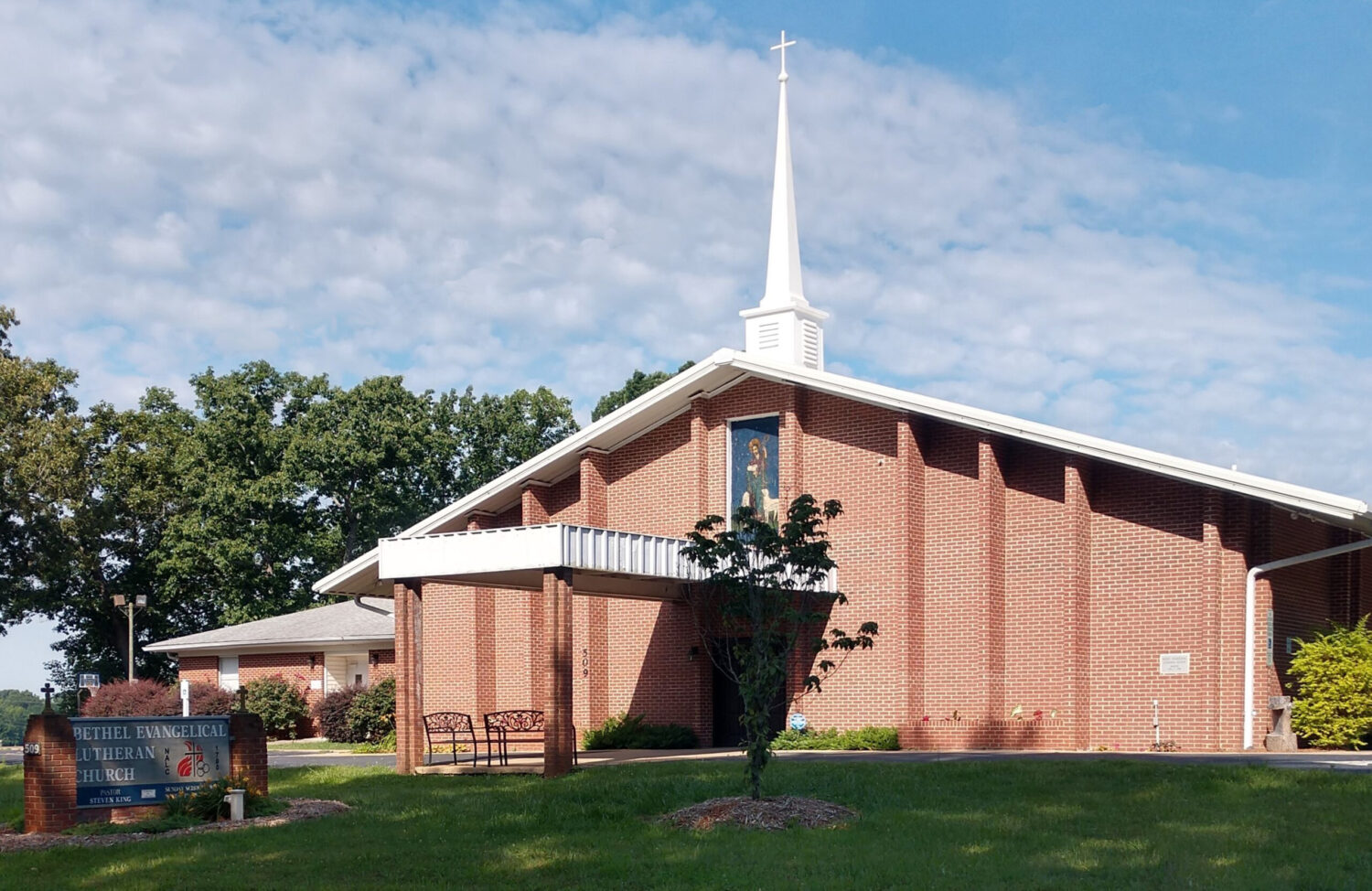
Today we celebrate Bethel’s 236th anniversary as a congregation. Stop and consider that fact for a moment. This congregation has seen every war, including this country’s Civil War, every hurricane, every downturn in our economy, and every change in attitude toward the church over the past quarter plus century. Countless churches in the surrounding area have come and gone, yet Bethel continues to be used of God. Could this not be considered a miracle? I know of congregations today that are twice or even three times our size that struggle week in and week out questioning if they’ll be able to remain viable in the weeks and months to come. Is this not a faithfulness and faith issue. We continue to remain a part of the Body of Christ in this world because we place our faith in God and continue to be faithful to our call to go and make disciples as Jesus has commanded us.
As faithful disciples we know that all things are possible with God. This is even more important during those occasions when we feel like we’re sinking. The Bible is clear, there will be times of difficulty, both as a church and in our personal lives. It’s in these more difficult times that we need to place our faith in the One who made and controls all things. American author, humorist, and radio personality, Garison Keillor, who was best known as the creator and longtime host of the public radio variety show A Prairie Home Companion, had a way of seeing a difficult situation in a humorous way.
According to Mr. Keillor, we all have that sinking feeling at one time or another. As Garrison tells it, there were 25 portly Lutheran ministers stuck out on the lake on a friend’s pontoon boat when one of these pastors suddenly realized the boat was tipping, bow to stern, and slowly sinking into the lake. As the unaware group was busy discussing theological matters and the difficulties of ministry, the boat kept tipping bow to stern deeper and deeper until one tip too many pitched several of the ministers right into the lake, a renewal of their baptism as Garrison put it! (Garrison Keillor, Leaving Home, New York, Viking, 1987, pp. 103-108).”
This of course is a comical view of an unfortunate incident on a lake, but Peter’s sinking that St. Matthew is describing in today’s reading isn’t comical at all. It’s the kind of fear you experience when you’re waiting for the doctor’s report on yourself or your loved one, or when you are about to start a new job, or go away to school. It’s that feeling of sinking you have when facing the failure of a marriage or of a business or facing a financially devastating situation. It’s during these difficult times in life when we, like Peter, cry out, “Lord, save me, I’m about to go under.”
It’s in these difficult times that we want to believe. It’s more than the adage of “there are no atheists in foxholes” because we really genuinely want to believe, not just in God, that’s easy enough, but that God really intervenes in our lives and in our world. We want to believe in miracles, but the doubt comes in when we wonder if miracles even happen anymore. We want to believe, but we’re not sure we can. The question is, do we look around and acknowledge the miracles that are happening all around us?
The truth is, miracles are happening all around us. The problem is, we simply don’t see them because they happen in ways that we don’t think. St. Augustine believed that miracles are occurrences which are contrary not to nature itself, but to what we know of nature. According to Pastor Ralph Sockman, “I do not believe Christ did what he did by suspending or violating the laws which medical science has discovered to be valid. What [Jesus] did do was to bring into use laws higher that modern science has yet charted.” (Ralph Sockman, 20 Centuries of Great Preaching, vol. 10, edited by Clyde E. Fant Jr. and William M. Pinson Jr., Waco, Texas, Word Books, 1971, p. 176).
But more than that, Stockman continues, they are acts of God in this sense: “… history is the arena where God intervenes specifically from time to time,” comforting us, pressing demands on us, and judging us for our disobedience. “It is these extraordinary interventions which, properly speaking, are the miracles of the Bible… they are sufficiently startling, unusual, and unexpected to call attention to themselves and point as signs to the kingdom of God.”
So maybe we ought to think of miracles such as Jesus healing the blind, the lame, the diseased, raising people from the dead, and the feeding of a huge crowd, not so much as proof of God’s kingdom, but as signs of it, and as such, only faith recognizes them as acts of a compassionate God. Furthermore, miracles don’t prompt faith – rather, faith helps us to see miracles. Miracles, then, in the real sense, are “completely inaccessible” to human reason because their causes lie “solely within the will of God,” and only faith can recognize this (Keller, op. cit. p. 21). So, one could say then that the real problem with miracles is not that they don’t happen. The real problem is they do.
And so as not to neglect Martin Luther in all this, Luther taught that miracles are not the primary means of salvation or conversion. In a 1525 sermon citing 1 Timothy 1:20, he said, “I would not want the grace to perform miracles… those who pay no attention to the Word… will not be moved by signs.” For Luther, the “greatest miracle” is the Word of God itself, which brings people to faith. He warned that signs and wonders, while potentially real, have no saving power unless they lead to a response to the Gospel.
The problem so many have with miracles today is that they think they prove something. But what do miracles really prove? If you believe that God is the author and creator of everything, then nothing. A thousand miracles would neither prove nor disprove Jesus’ teachings. Miracles can neither make true teaching false, nor false teaching true. Jesus understood this. That’s why He kept downplaying the miracles. That’s why He kept telling the disciples to keep quiet about them. Far too many people today think a miracle will show an unbeliever that God exists, but that’s not the way miracles work.
In Bruce Marshall’s novel Father Malachy’s Miracle, Father Malachy prays fervently that God would physically move an obnoxious dance hall on Edinburgh Street to the Bass Rock in the Inlet of Forth. And sure enough, it happens. But instead of bringing notoriety to himself and his church, the miracle is a source of embarrassment. Far from strengthening their faith in God, it becomes the focal point of public ridicule. Even the police are angry over the disturbance of the peace it causes. “A pretty kettle of fish,” says the bishop. “Umph! A miracle in the 20th century.”
Bruce Marshall’s theology is right on target in this novel. God is not some divine magician ready to pull rabbits out of every hat we offer up in prayer; miracles do not produce faith. It’s only through the faith God provides that we even recognize them at all. It was only by faith that Mary Magdelene recognized Jesus at the empty tomb. Only in faith did the disciples recognize the stranger on the road to Emmaus. And how do real miracles become evident to us? It’s when we place our faith in God and look to see His work in our lives and in our world.
Certainly, it could happen in the dramatic turnaround of an incurable illness. It may come in changed attitudes toward people and events. It may happen through us as the hungry are fed and the naked are clothed. Miracles happen when God intervenes in our lives and in our world. And this happens in very noticeable ways and in barely conceivable ways. Miracles happen all around us in ways that are unexplainable except to the eyes of faith.
19-year-old Khum Paot recounts her narrow escape from the Khmer Rouge in Cambodia after an arduous journey with 100 other refugees through miles of jungle, canals, mountains, and rivers. Between them and freedom were Communist troops and “a stretch of jungle ground covered with thorns.” At midnight the little party crossed a valley between two high mountain ranges. “We could see absolutely nothing,” she told a missionary later. “We couldn’t even see where to step.” Then suddenly scores of fireflies swarmed into view, and by the glow of firefies they made their way to the next mountain.
At Kham Put refugee camp Khum Paot was invited to a Christian meeting. When she came in, she pointed to a picture on the wall of the chapel. “I know that old man,” she said. “He’s the one who led us to freedom.” She’d never seen it before, but it was a picture of Jesus. I don’t know how these things happen. I just know they do and only the eyes of faith can see them. Other than by what the Bible tells me, I can’t explain how the waters parted for Moses, or what exactly happened by that boat with the disciples that day, but I can tell you this — you’ll never convince me or them that God wasn’t there. Whatever happened, God intervened and saved them. And miracles still happen today, in our world, in our time.
I know it isn’t easy to believe in miracles today. The problem isn’t that they don’t happen. The problem is that they do. The question is do we have enough faith to see them and experience in them God’s power and God’s presence in our lives? The question is, do we see what’s happening in our lives and in our world through the eyes of faith, or are we too busy trying to explain things away?
Amen