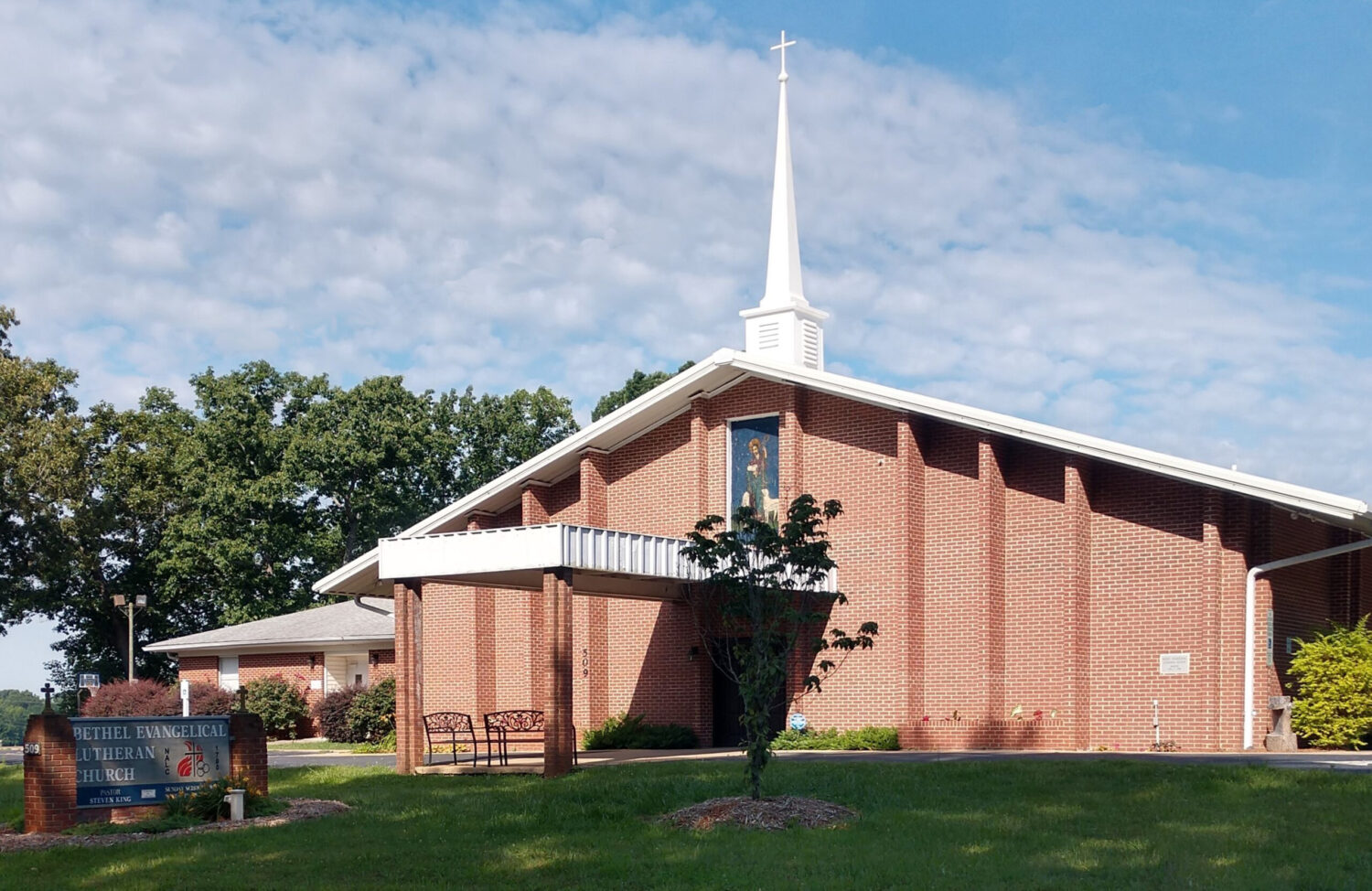
First Reading: Isaiah 25:6-9
6On this mountain the Lord of hosts will make for all peoples a feast of rich food, a feast of well-aged wine, of rich food full of marrow, of aged wine well refined. 7And he will swallow up on this mountain the covering that is cast over all peoples, the veil that is spread over all nations. 8He will swallow up death forever; and the Lord God will wipe away tears from all faces, and the reproach of his people he will take away from all the earth, for the Lord has spoken. 9It will be said on that day, “Behold, this is our God; we have waited for him, that he might save us. This is the Lord; we have waited for him; let us be glad and rejoice in his salvation.”
Psalm 23
1The Lord is my shepherd; I shall not be in want. 2He makes me lie down in green pastures and leads me beside still waters. 3He revives my soul and guides me along right pathways for his name’s sake. 4Though I walk through the valley of the shadow of death, I shall fear no evil; for you are with me; your rod and your staff, they comfort me. 5You spread a table before me in the presence of those who trouble me; you have anointed my head with oil, and my cup is running over. 6Surely your goodness and mercy shall follow me all the days of my life, and I will dwell in the house of the Lord forever.
Second Reading: Philippians 4:4-13
4Rejoice in the Lord always; again I will say, rejoice. 5Let your reasonableness be known to everyone. The Lord is at hand; 6do not be anxious about anything, but in everything by prayer and supplication with thanksgiving let your requests be made known to God. 7And the peace of God, which surpasses all understanding, will guard your hearts and your minds in Christ Jesus. 8Finally, brothers, whatever is true, whatever is honorable, whatever is just, whatever is pure, whatever is lovely, whatever is commendable, if there is any excellence, if there is anything worthy of praise, think about these things. 9What you have learned and received and heard and seen in me — practice these things, and the God of peace will be with you. 10I rejoiced in the Lord greatly that now at length you have revived your concern for me. You were indeed concerned for me, but you had no opportunity. 11Not that I am speaking of being in need, for I have learned in whatever situation I am to be content. 12I know how to be brought low, and I know how to abound. In any and every circumstance, I have learned the secret of facing plenty and hunger, abundance and need. 13I can do all things through him who strengthens me.
Gospel: Matthew 22:1-14
1Again Jesus spoke to {the chief priests and the Pharisees} in parables, saying, 2“The kingdom of heaven may be compared to a king who gave a wedding feast for his son, 3and sent his servants to call those who were invited to the wedding feast, but they would not come. 4Again he sent other servants, saying, ‘Tell those who are invited, “See, I have prepared my dinner, my oxen and my fat calves have been slaughtered, and everything is ready. Come to the wedding feast.’” 5But they paid no attention and went off, one to his farm, another to his business, 6while the rest seized his servants, treated them shamefully, and killed them. 7The king was angry, and he sent his troops and destroyed those murderers and burned their city. 8Then he said to his servants, ‘The wedding feast is ready, but those invited were not worthy. 9Go therefore to the main roads and invite to the wedding feast as many as you find.’ 10And those servants went out into the roads and gathered all whom they found, both bad and good. So the wedding hall was filled with guests. 11But when the king came in to look at the guests, he saw there a man who had no wedding garment. 12And he said to him, ‘Friend, how did you get in here without a wedding garment?’ And he was speechless. 13Then the king said to the attendants, ‘Bind him hand and foot and cast him into the outer darkness. In that place there will be weeping and gnashing of teeth.’ 14For many are called, but few are chosen.”
12 Important Words
When I say the word “mantra,” I’m betting that the first thought that comes to mind are the chants associated with Hinduism and Buddhism. In modern times, mantras have been used for years in the business and self-help worlds to improve performance. Slogans like “enjoy simple”, or “I am the master of my own destiny”, or “Nothing great was ever achieved by being realistic!” The internet is full of these types of phrases. But would you be surprised if I told you that Christians have mantras as well.
One of the earliest Christian mantras is 4 simple words, stated in different combinations, said three times have been used in every circumstance imaginable. This combination of words can be used as words of thanksgiving as well as in times of distress. Can anybody guess what this early Christian mantra is? Lord have mercy, Christ have mercy, Lord have mercy. These words come from the Psalms such as Psalm 6:2 and Psalm 9:13. We know this mantra as part of our worship, the Kyrie, or the Kyrie eleison which is Greek and is translated as Lord have mercy. These words have been used for more than 2,000 years in Christian worship as a plea for divine compassion.
These four words, Lord have mercy, Christ have mercy, Lord have mercy, spoken three times, or as many times as we need, can be used to help beat back those forces and powers that are dragging us down. This Christian mantra is a cry to God for help, a cry that’s always heard and always answered. If you don’t use this prayer, I encourage you to begin. In addition to these powerful words of prayer, Paul gives us another phrase we can use, and it’s found in this morning epistle text. It’s not really a prayer, so I guess you could say that it’s truly a mantra, it’s words of guidance. St. Paul gives us not 4 words, but 6 words of guidance: six words that can bring us peace, and dare I say it, six words that can save our life.
But before I tell you Paul’s six words, I need to set them up by having you re-visit a medieval monastery. In these incubators of holiness, there were often multiple gardens. The center-most garden space was called the “garth.” The “garth” was protected by the walls of the cloister, by the labyrinth of out-buildings, and by the multitude of pathways.
The reason the inner court of the monastery is different, is that unlike other parts of the monastery where the grounds are open to the public, the “garth” was reserved for the exclusive use of the monks. The “garth” was a sacred space, a place for prayer, of Bible reading and meditation, a place of solitude, and solace. The “garth” acted as the “keep” for the spiritual health and well-being of the community. In the “garth,” the prayerful sought “the peace of God that passes all understanding.”
For those of us not living a cloistered life, who don’t reside behind monastery walls with a “garth,” locating a place to find the peace of God can be difficult. With the pace of life these days, finding an island in life where we can encounter and embrace “the peace of God” can appear to be a fool’s quest. Or is it? When you stop and think about it, don’t we experience places of solitude on a regular basis?
Our car, for example, when trapped in rush hour traffic on I-85, can’t that be a “garth”? Or, how about your office, can you not close the door to shut out the tensions, deadlines, panic, and the prickly personalities, is it possible that it too could be a “garth”? What about our front porches, sitting with a cup of coffee or a glass of iced tea in the cool of the day, can that be a “garth”? Or the living room, can we not silence the computers, the T.V., the phone and other distracting devices, can that possibly be a “garth”? We don’t have to drive to the beach or the mountains to find a secluded place, can we not find a few moments and a quiet place in which to spend time with God?
In this week’s epistle reading, St. Paul offers to the congregation at Philippi a road map to a new kind of existence, an existence abridged of anxiety, a life with a reduced amount of worry and gnawing doubt, a life filled and fulfilled by what the apostle called “the peace of God which passes all understanding.” How do we reach that place of solitude? That place of quiet where we can communicate with God?
Paul offers us guidance to reduce the stress of the world in three couplets, three statements that give precise directions to this place of peace. To paraphrase the first part of today’s Second Reading: Rejoice in God always; Be anxious about nothing; be prayerful in everything. Or to say it in the mantra form: Rejoice always: Be anxious about nothing: Pray about everything. Rejoice, pray, and don’t worry. What amazing advice! For me this has got to be the recipe for peace. Do you want the peace of God, “the peace that passes all understanding?” Then follow these directions and Paul promises, you will find the “peace of God,” your own personal “garth” among the landscape. Just six words, three couplets: Rejoice always; Anxious, No; Prayerful, Everything.
Of course, Paul’s path to peace isn’t always instantaneous. It can be more difficult to follow than it first appears. First, we must realize Paul gave these in reverse order. However, we can mix it up any way we want. For me, the best order is Pray about everything, rejoice no matter the circumstance, and give your anxiety over to God. If we do this, we will have peace. Now one thing I do need to point out, and this is important here, Paul is saying be prayerful, be thankful and not anxious IN, he’s not saying we’re to be thankful about a difficult situation.
We’re not expected to rejoice and to be thankful about getting the car totaled for example. That would be absurd. However, in the midst of the stress, the worry, and inconvenience, we need to be thankful that God can and does work. While we’re in these difficult times and situations, we should be in prayer, not given to anxiety, and giving God thanks for the work He is doing during that time. Be thankful always, be prayerful about, and not be anxious in. These are challenging words that can be life changing, and they deserve a closer look.
The first and foundational direction is toward “thankfulness.” Again, being “thankful” in anything. Sometimes the words choke coming out, as being “thankful in anything” isn’t easy. However, we must recognize that our ultimate thanksgiving is in Christ and His salvation. Because of this gift of Christ, we can be thankful in all things. Even during a time of high inflation and uncertain times we should be thankful.
Gratitude to God is the foundation, the first step in progressing towards peace. When we begin at the beginning, with God, who is the source of all good gifts, and recognize all He’s done for us, only after our infinite debt has been acknowledged, only then can we move forward. I’m not saying that this first step will be easy, I’m not implying that this will be our first reaction to the difficult times. I am saying that this first step is huge! And I also recognize that this first step seriously takes into account the shortfall of our lives.
The recognition of our sinfulness tromps on “I was Young” or “I didn’t mean it” or I’ll make it up later” or “No one will notice.” The tiny sins, the bad moments, the real disappointments, the big-time crimes—they all come together in this first step. This first step encompasses all our human weaknesses and fallibilities. The small-time infringements: The larger than life downfalls. Christ didn’t distinguish, didn’t care, didn’t ask about “less” or “more.” He went to the cross for every one of these shortcomings. That’s what each of us must be thankful for. That gift that embraced and embodied all of our sins and shortcomings—no matter how small, no matter how large. It’s only after acknowledging God’s amazing sacrifice, this gift of salvation, with genuine, heartfelt thanksgiving, that the ball can start rolling. I’m absolutely certain it’s very difficult for any of us to say: I am thankful in all circumstances.
Being thankful for an increase in income, probably: Thankful for losing half your investment in the stock market, not so much. Thankful for our children and grandchildren who give us love and joy, you betcha! Thankful for the times when our children caused us pain and worry, that’s much more difficult. Thankful for jobs, families, homes, friends, enemies, unemployment, rejection, ostracism; we probably have a lot of work to do. Thankful always. Once we’ve mastered “thankfulness,” the rest becomes much easier.
If we’re truly “thankful always,” the “prayerful in everything” component is kind of a given. There’s no way to be thankful always without resorting to being prayerful in everything. Try being thankful for your overly demanding boss without uttering a prayer first. Try sending out the mortgage payment without uttering a prayer first. Try believing in the future, in these unsettling political and financial times, without uttering a prayer first. We must be prayerful in everything, once we’re thankful for anything, because thanksgiving requires prayer and prayer is the most essential nutrient. But how can we learn to be anxious about nothing?
Surprisingly, the easiest of Paul’s directives is the one that sounds the hardest: be “anxious” in “nothing.” Once thankfulness and prayerfulness are established, the relief from anxieties, from day to day “worry-wartness,” will slowly be purged from our lives. Of course, this doesn’t mean that everything will be hunky-dunky, that life will be footloose and stress-free. In fact, following Jesus will most likely bring a host of added difficulties and discord to your life. Nowhere in the Bible are we promised a trouble-free life. What we are promised is a place and a person where we can go to lay our burdens down and a place to receive peace. What we’re offered is a focus for our lives and for our future.
With the larger vision of Christ at the top of our horizons, and with the always-open doorway to prayer and petition available to us, there simply is no fertile ground to nurture anxiety and distress. The fear and doubt, the despair and misery, that provided the nutrients for growing anxiety are dried up and blown away by each prayer spoken, by each bread-of-life broken, by each token of gratitude. I’m sure some of you are sitting there thinking, “this makes for a nice chant, but it isn’t always as neat as all that.” And you’re right. Paul understood this. That’s why he added the words we find in verse 8.
“Finally, beloved, whatever is true, whatever is honorable, whatever is just, whatever is pure, whatever is pleasing, whatever is commendable, if there is any excellence and if there is anything worthy of praise, think on these things.” Paul knew it’s more than simply learning to change our attitude and focus, it’s also about changing the way we think and perceive life. When we refuse to dwell on the bad as the only alternative, refuse to consider the brokenness around us as the final word, and refuse to see only the wickedness as the only option, then we can begin to see God’s hand at work in our lives and in the world around us. Paul knew how hard all this was. And Paul had become an expert in learning to see God’s work in all things.
Paul, as a Pharisee, knew what it was like to have everything go his way. But after meeting Jesus on the road to Damascus, he also knew what it was like to live under oppression. Because of his willingness to serve God in all things, Paul also learned what it was like to have little. To be driven off, shipwrecked, beaten, and imprisoned. If anyone was an authority on how to deal with the worst this world can offer it was Paul. But St. Paul knew where his hope lay.
Paul placed his hope in the one and only God who not only answers prayers but walks with us every step of the way. And with that hope and promise before us, despite what life can throw at us, we can learn to change the way we approach, see, and deal with life. And when we learn to embrace thankfulness and prayer, when we learn to change our attitude and view of this world, it’s then that we can enjoy the blessings of living anxiety (but not trouble) free. Trouble will come, temptations will come, trials will come, but that doesn’t mean that we’re overcome. When we truly believe that because Christ is for us so no one can be against us, we can then become a Shalomer.
“Shalom” is the Hebrew word for peace. Peace, in the Hebrew sense of “shalom”, is far more than the absence of conflict. Shalom is a state of being, a presence of wholeness and holiness. Shalom is an incarnation of a divine gift. In short, Shalom is the best human beings can hope to be in this world. And those who bring “Shalom” into this world, can be called “Shalomers.”
The question we need to ponder is, what will it take for us to become a “Shalomer?” What will it take for us to become someone who advertises and advocates God’s peace unto this world? First, it’s about prayer, second, it’s about focus, and lastly, it’s about attitude. St. Paul knew this and this is why he gave these words to the church. It’s not an easy task, but again Paul said it best in verse 13. I can do all things through Him who strengthens me. To help us, Paul gave us instructions that I’ve boiled down to just 12 words to remember. Lord have mercy. Pray about everything, be thankful always, never be anxious.
If we start each day with the prayer Lord have mercy, Christ have mercy, Lord have mercy and repeat these words as many times as needed, if we can learn to be thankful always, we can then begin to turn all the worries of this world over to God. Once we’ve learned to let go of those things out of our control, we can then begin to experience God’s peace, the Shalom of God that comes with being prayerful in everything, thankful in anything and anxious in nothing. If we can indeed learn to change the way we approach each day and everything that comes with living in this world, we too will be able to say with St. Paul, I can do all things in Christ who strengthens me. We too will be a Shalomer.
Amen